
Acne scars can feel like a permanent reminder of past breakouts especially when uneven texture, dents, or pitted marks remain long after active acne has cleared. Many people spend years searching for treatments that genuinely improve skin texture without aggressive procedures or unrealistic promises.
Microneedling for acne scars has become one of the most talked-about options because it works with your skin’s natural healing process rather than simply covering imperfections. But how effective is it really? How many sessions do you need? And what kind of improvement can you realistically expect?
In this guide, you’ll learn how microneedling works for acne scars, which types of scars respond best, what results look like over time, potential risks, recovery expectations, and how to decide whether it is the right acne scar treatment for your skin.
What Is Microneedling for Acne Scars and How Does It Work?
Microneedling is a skin rejuvenation treatment that uses very fine needles to create controlled micro-injuries in the skin. These tiny channels stimulate the body’s natural repair response, encouraging the production of collagen and elastin proteins responsible for skin strength, firmness, and smoother texture.
For acne scars, this process is often referred to as collagen induction therapy for acne scars.
Unlike treatments that remove the surface layers of skin, microneedling aims to remodel the deeper structure of the skin. Over time, newly produced collagen can help soften depressed scars and improve overall texture.
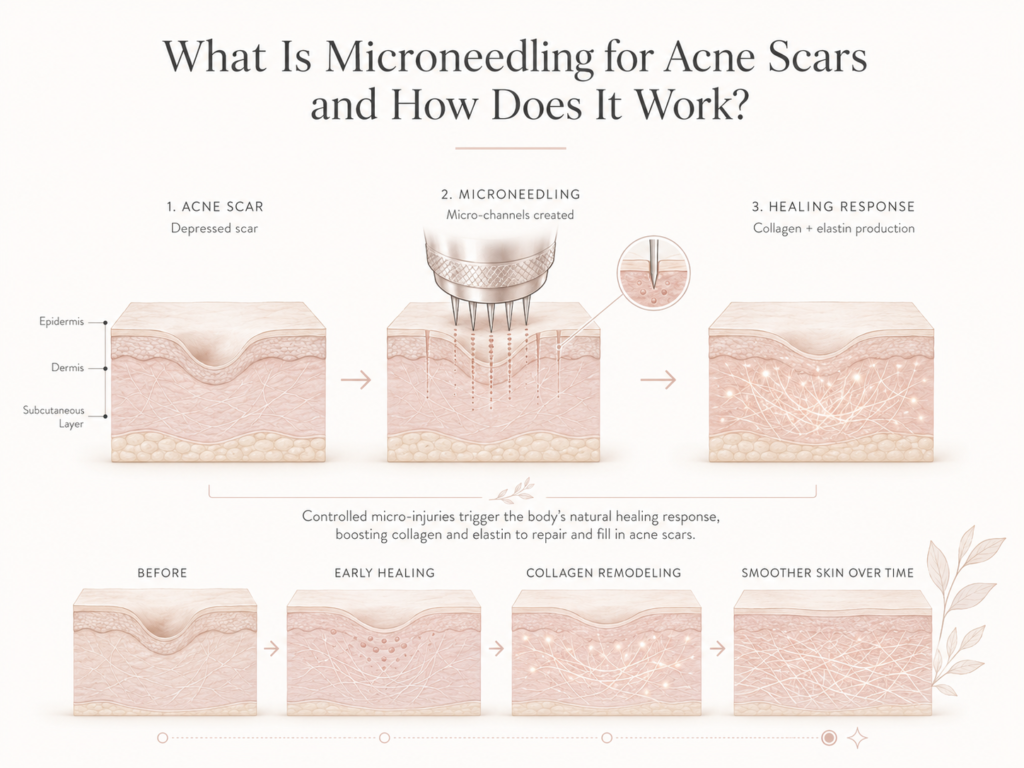
How microneedling helps acne scar texture
When acne damages the skin, it can disrupt normal collagen formation. Some scars develop because too little collagen is produced during healing, leaving indentations or depressions.
Microneedling encourages a controlled healing response that may:
- Improve uneven skin texture
- Reduce the depth of certain depressed scars
- Make pores appear smaller
- Create smoother-looking skin
- Improve overall skin tone and firmness
The results are gradual because collagen production takes time. Unlike makeup or resurfacing treatments that create an immediate visual change, microneedling works through a biological repair process.
Featured snippet answer:
Microneedling improves acne scars by creating tiny controlled injuries in the skin that stimulate collagen production. This can gradually soften depressed scars and improve skin texture over several treatment sessions.
What Types of Acne Scars Respond Best to Microneedling?
Not all acne scars are the same. Understanding your scar type is one of the most important steps before choosing any treatment.
Microneedling tends to work best for textural acne scars, particularly scars caused by collagen loss.
Microneedling for pitted scars
Many people searching for microneedling for pitted scars are referring to depressed acne scars that create small indentations in the skin.
Common types include:
Ice pick scars
Ice pick scars are narrow, deep scars that extend into the skin. Because they are deeper and more sharply defined, microneedling alone may provide limited improvement.
Treatments such as punch excision, TCA CROSS, or combination approaches may sometimes be recommended depending on the individual case.
Boxcar scars
Boxcar scars are wider depressions with clearer edges. These often respond better to collagen-stimulating treatments because they involve broader areas of collagen loss.
Rolling scars
Rolling scars create a wave-like uneven appearance caused by changes beneath the skin. Microneedling may help improve their appearance, although some cases benefit from combining treatments such as subcision.
A qualified practitioner should assess whether your scars are suitable for microneedling or whether another approach would produce better results.
Internal link opportunity:
Link to a related guide such as “Different Types of Acne Scars Explained: Ice Pick, Boxcar and Rolling Scars”.
What Results Can You Realistically Expect From Microneedling for Acne Scars?
One of the biggest misconceptions about microneedling is expecting completely scar-free skin after one treatment. In reality, acne scar improvement is usually gradual and varies from person to person.
A realistic goal is visible improvement in texture and scar appearance, not complete removal.
Microneedling results for acne scars: timeline
Most people notice changes in stages:
After the first session
Immediately after treatment, the skin may appear brighter or slightly smoother due to increased circulation and temporary swelling. However, this is not the final result.
The deeper collagen-remodelling process usually takes several weeks.
After 4–8 weeks
New collagen formation begins gradually. Some people notice:
- Smoother skin texture
- Slightly softer scar edges
- More even-looking skin
After multiple sessions
Most professional treatment plans involve several sessions spaced weeks apart. Multiple treatments allow repeated collagen stimulation and gradual improvement.
Results depend on factors including:
- Scar type and severity
- Skin condition
- Age
- Lifestyle factors
- Practitioner technique
- Aftercare
How much improvement is possible?
Clinical outcomes vary, but many patients experience noticeable improvement rather than complete scar removal. Deeper scars often require combination treatments for the best outcome.
A realistic expectation is:
- Mild scars: potentially significant texture improvement
- Moderate scars: visible softening and smoothing
- Severe scars: improvement may require multiple treatments or combined procedures
A trustworthy clinic should discuss likely outcomes honestly rather than guarantee perfect skin.
How Many Microneedling Sessions Are Needed for Acne Scars?
The number of treatments depends on your skin and scar severity, but many people require a course rather than a single appointment.
A common professional approach is:
- 3–6 sessions for mild to moderate acne scars
- Sessions usually spaced around 4–6 weeks apart
- Longer treatment plans may be recommended for deeper scarring
The reason spacing matters is that collagen remodelling continues after the procedure. Treating too frequently does not necessarily create faster results and may interfere with proper healing.
Factors that influence your results
Your outcome may be affected by:
Your acne scar type
Rolling and some boxcar scars often respond better than very deep ice pick scars.
Your skin health
Healthy skin with a strong barrier usually recovers more effectively.
Your practitioner’s experience
Microneedling depth, technique, hygiene standards, and treatment planning all influence safety and effectiveness.
Your aftercare routine
Protecting the skin after treatment helps support healing and reduces unnecessary irritation.
Internal link opportunity:
Link to “Microneedling Aftercare: What to Do and Avoid After Treatment”.
Is Microneedling Safe for Acne Scars?
When performed correctly by a trained professional, microneedling is generally considered a safe cosmetic procedure for many people.
However, like any treatment that affects the skin, it has potential risks.
Common temporary side effects
After microneedling, it is normal to experience:
- Redness
- Mild swelling
- Skin sensitivity
- Tightness
- Dryness
- Light peeling
These effects usually improve within a few days.
Possible risks
Less common complications can include:
- Infection if hygiene standards are poor
- Increased pigmentation, especially in some skin types
- Prolonged irritation
- Skin damage from inappropriate treatment depth
Choosing an experienced practitioner is particularly important if you have darker skin tones or a history of pigmentation issues.