How Many Laser Hair Removal Sessions Are Needed?
If you are considering laser hair removal, one of the first questions you probably want answered is: how many laser hair removal sessions will I actually need before I see results?
The honest answer is that most people need a course of multiple treatments rather than a single appointment. While some notice a reduction in hair growth after the first few sessions, achieving significant long-term results usually requires a planned series of treatments spaced correctly over several months.
The average person typically needs around 6 to 8 laser hair removal sessions, although the exact number can vary depending on factors such as your hair colour, skin type, treatment area, hormones, and how well your hair responds to the laser.
In this guide, you will learn:
- How many sessions are usually needed for different body areas
- Why multiple treatments are necessary
- What results you can realistically expect
- What affects the length of your laser hair removal treatment course
- How to prepare for your appointments and get the best outcome
Whether you are considering treating your legs, underarms, bikini area, face, or another area, understanding the process can help you make a confident decision before booking.
The Short Answer: How Many Laser Hair Removal Sessions Do You Need?
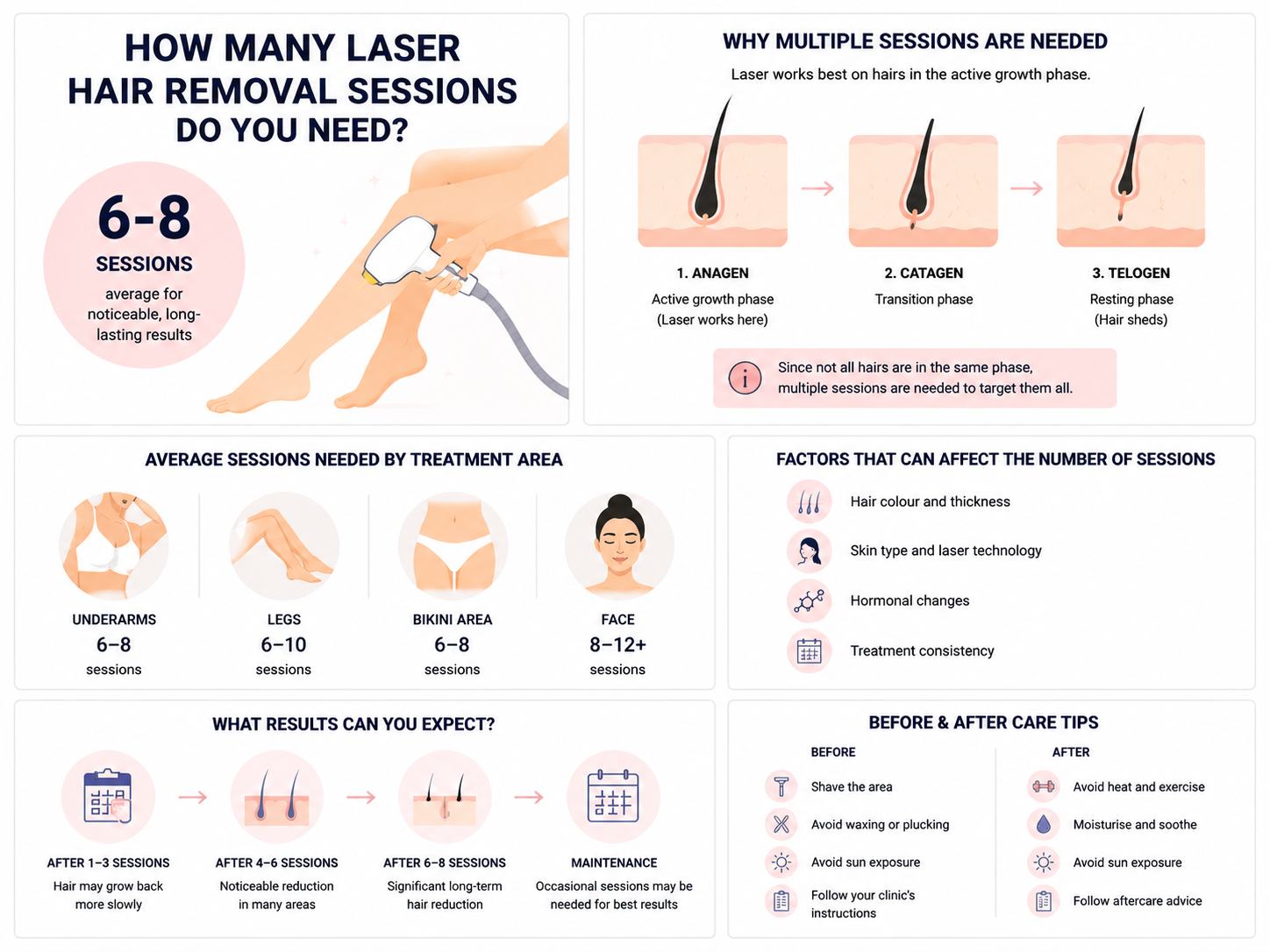
Most people need between 6 and 8 laser hair removal sessions for noticeable, long-lasting hair reduction.
However, this is only a general estimate. Some people may achieve their desired results in fewer sessions, while others may require 10 or more treatments.
Laser hair removal works by targeting hair follicles during the active growth phase (anagen phase). Since not all hairs are growing at the same time, one treatment cannot affect every follicle.
Each session catches a different group of hairs that have entered the ideal growth stage.
A typical treatment schedule may look like this:
| Treatment stage | What usually happens |
|---|---|
| Sessions 1–2 | Early reduction in hair growth; some areas may show slower regrowth |
| Sessions 3–5 | More noticeable thinning and reduced shaving frequency |
| Sessions 6–8 | Significant reduction for many clients |
| Maintenance sessions | Occasional treatments may be needed depending on individual response |
Laser hair removal is therefore best viewed as a long-term hair reduction treatment course, not a quick one-off solution.
Why Do You Need Multiple Laser Hair Removal Sessions?
Many people expect laser hair removal to remove all unwanted hair after one appointment. This is one of the most common misconceptions.
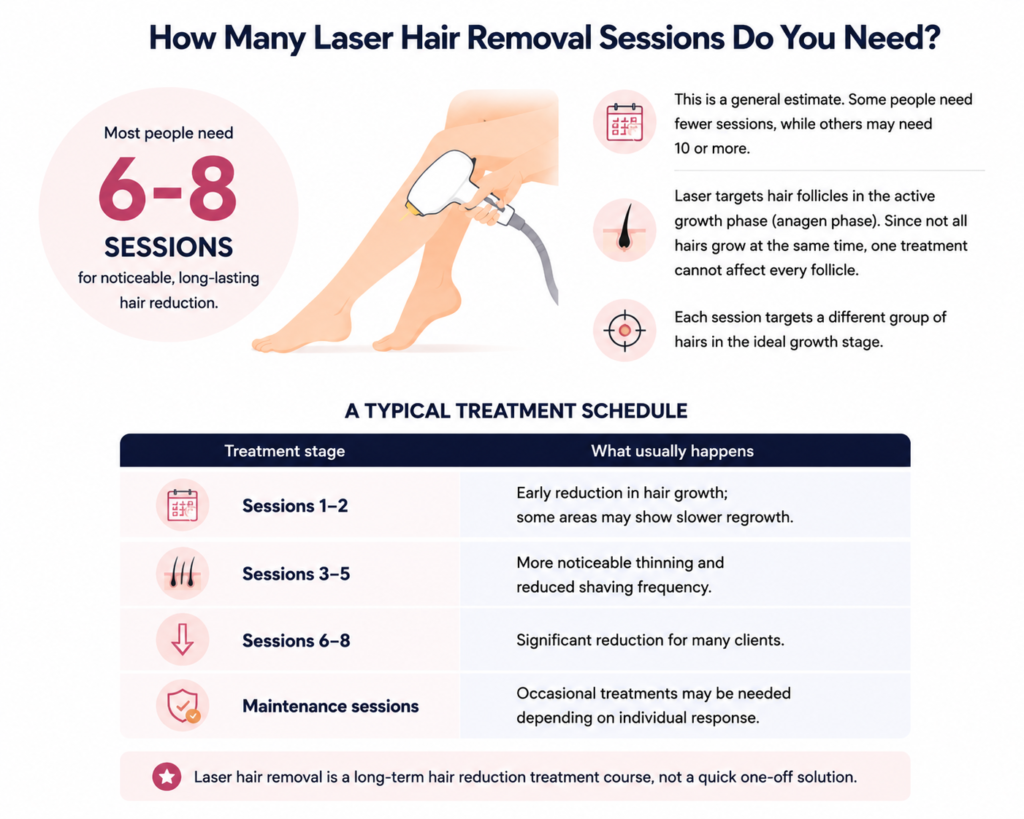
The reason multiple sessions are needed comes down to the natural hair growth cycle.
Hair Growth Cycles Affect Laser Results
At any given time, your body has hairs in different stages:
- Active growth phase (anagen) – the stage when laser treatment works most effectively
- Transition phase (catagen) – when the hair stops growing
- Resting phase (telogen) – when the hair eventually sheds
Laser energy is absorbed by pigment in the hair and travels down to the follicle. It is most effective when the hair is actively connected to the follicle.
Because only a percentage of hairs are in the active growth phase during each appointment, several sessions are required to target different follicles.
This is why spacing appointments correctly is important. Booking treatments too close together may mean fewer hairs are in the ideal treatment stage.
How Many Sessions Are Needed for Different Body Areas?
The number of laser hair removal sessions needed can vary depending on the area being treated.
Some areas respond faster because of differences in hair thickness, hormone sensitivity, and growth cycles.
Underarms
Average sessions needed: 6–8 treatments
The underarm area often responds well because the hair is usually darker and thicker, making it easier for the laser to target.
Many clients notice:
- Slower regrowth after the first few sessions
- Less frequent shaving
- Finer, softer hair texture over time
Maintenance treatments may occasionally be recommended after completing the initial course.
Legs
Average sessions needed: 6–10 treatments
Leg hair can take slightly longer because the area is larger and different sections may respond at different rates.
For example, someone with dark, coarse leg hair may see faster improvement than someone with lighter or finer hair.
A full leg treatment course usually requires patience because appointments are spaced several weeks apart.
Bikini Area
Average sessions needed: 6–8 treatments
The bikini area often responds well because the hair is commonly thicker and more pigmented.
Many people choose laser hair removal in this area because it can help reduce:
- Regular shaving
- Razor irritation
- Ingrown hairs
Face
Average sessions needed: 8–12+ treatments
Facial hair can be more challenging, especially when hormones influence hair growth.
Areas such as the:
- Upper lip
- Chin
- Jawline
may require more sessions compared with other body areas.
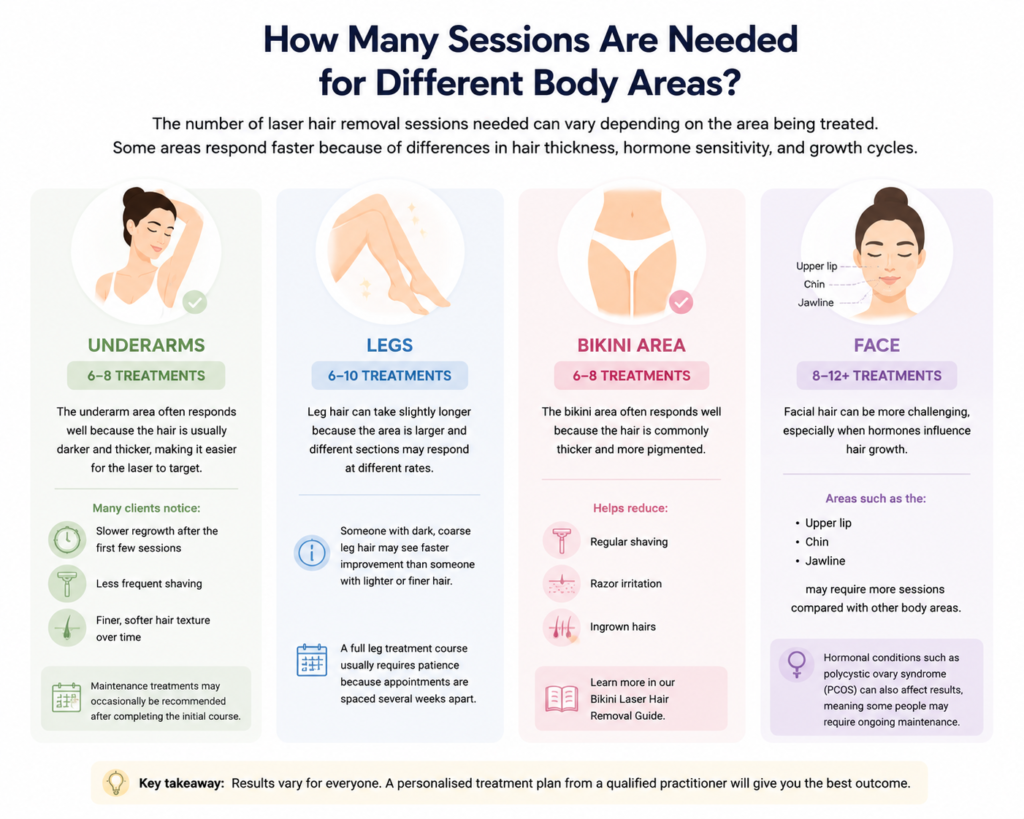
Hormonal conditions such as polycystic ovary syndrome (PCOS) can also affect results, meaning some people may require ongoing maintenance.
What Factors Affect How Many Laser Hair Removal Sessions You Need?
There is no universal number of treatments because every person’s hair and skin combination is different.
Several factors influence how quickly you see results.
1. Hair Colour and Thickness
Laser technology works by targeting pigment in the hair.
People with darker, thicker hair often respond well because the laser can more easily identify the follicle.
Very light blonde, grey, white, or red hair may respond less effectively because there is less pigment for the laser to target.
2. Skin Type and Laser Technology
Modern laser systems can be adjusted for different skin tones, but the type of laser used matters.
A reputable UK clinic should assess your skin type and hair characteristics before starting treatment.
Common professional laser technologies include:
- Alexandrite lasers
- Diode lasers
- Nd:YAG lasers
The safest and most effective option depends on your individual needs.
3. Hormonal Changes
Hormones can influence hair growth patterns.
People experiencing hormonal changes, pregnancy-related changes, menopause, or conditions affecting hormone levels may find that they need additional treatments.
This does not mean laser treatment will not work, but expectations should be realistic.
4. Treatment Consistency
Following your recommended schedule is one of the biggest factors affecting results.
Missing appointments or delaying treatments significantly can extend the overall treatment timeline.
Your practitioner will usually recommend intervals based on the treatment area and hair growth cycle.
What Results Can You Expect After a Laser Hair Removal Treatment Course?
A common question is whether laser hair removal gives permanent results.
The most accurate description is long-term hair reduction.
Laser hair removal can significantly reduce hair growth, but it does not always guarantee that every treated hair will disappear forever.
After completing a treatment course, many people experience:
- Less frequent shaving
- Slower hair regrowth
- Finer hair texture
- Fewer ingrown hairs
- Smoother skin
Some people choose occasional maintenance sessions to manage any remaining or returning hair.
When Will You Start Seeing Results?
Many people notice early changes after the first few sessions, but results usually become more noticeable after completing several treatments.
A realistic timeline may be:
- After 1–3 sessions: Hair may grow back more slowly
- After 4–6 sessions: Noticeable reduction in many treated areas
- After completing the course: More significant long-term reduction
Results vary, so it is important to avoid comparing your progress directly with someone else’s.
How to Get the Best Results From Your Laser Hair Removal Sessions
Following good preparation and aftercare can help your treatment course run smoothly.
Before Your Appointment
You should usually:
- Shave the treatment area as advised by your clinic
- Avoid waxing or plucking before treatment
- Avoid excessive sun exposure
- Follow any specific preparation instructions provided
Waxing removes the follicle root, which means there may be less target for the laser.
After Your Appointment
After treatment:
- Avoid irritating skincare products for a short period if advised
- Protect treated areas from strong sunlight
- Use recommended soothing products
- Avoid picking or scratching the skin
A qualified practitioner should provide personalised aftercare advice based on your treatment area and skin response.
Is Laser Hair Removal Worth It Compared With Shaving or Waxing?
For many people, laser hair removal becomes worthwhile because it reduces the ongoing effort involved in traditional hair removal methods.
Compared with shaving, laser treatment may help reduce:
- Daily or weekly maintenance
- Razor bumps
- Skin irritation
- Time spent removing hair
Compared with waxing, it can be appealing because it does not require repeatedly growing hair out between appointments.
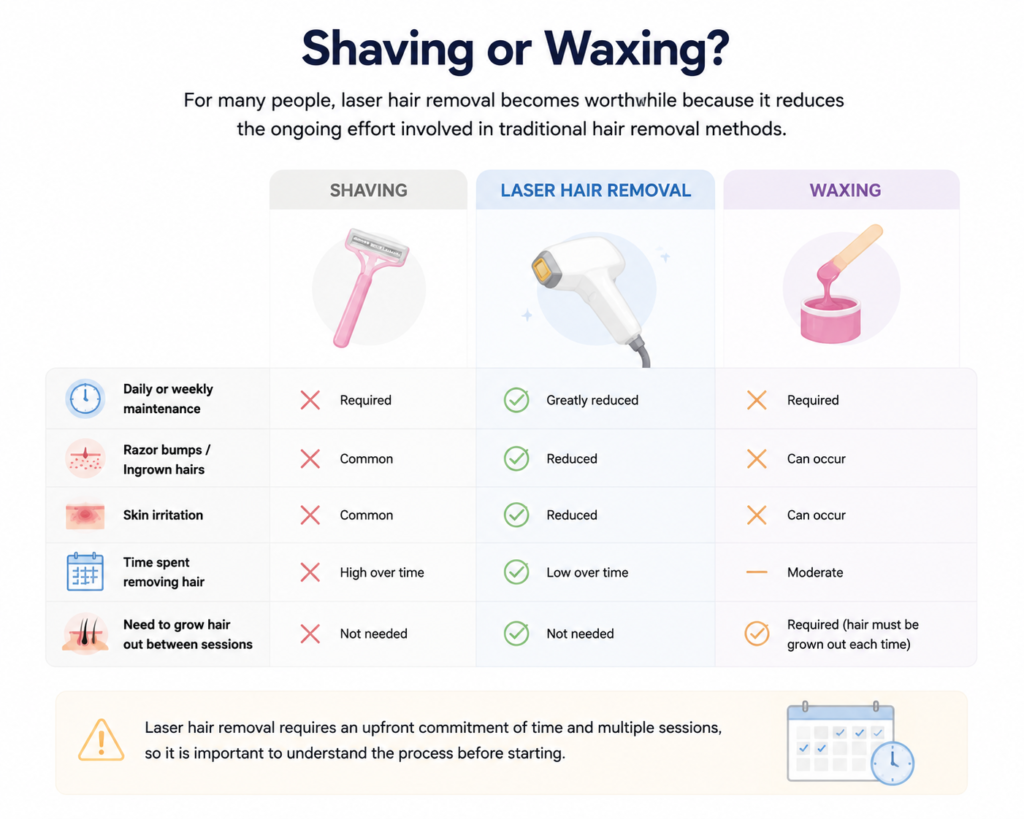
However, laser hair removal requires an upfront commitment of time and multiple sessions, so it is important to understand the process before starting.
Frequently Asked Questions About Laser Hair Removal Session
How many sessions for laser hair removal are needed for permanent results?
Most people need around 6 to 8 sessions for significant long-term hair reduction. However, results vary depending on hair type, skin tone, hormones, and treatment area. Some people may need additional maintenance sessions.
Can I see results after one laser hair removal session
Yes, some people notice reduced hair growth after their first session, but one treatment is unlikely to provide complete results. Multiple sessions are needed because laser treatment only targets hairs in the active growth phase.
How long should I wait between laser hair removal sessions?
The recommended gap depends on the treatment area and your hair growth cycle. Many treatments are spaced several weeks apart, with facial areas often requiring shorter intervals than larger body areas.
Does laser hair removal work on all hair types?
Laser hair removal works best on darker hair because the laser targets pigment. Very light, grey, or white hair may be more difficult to treat effectively.
Will I need maintenance laser hair removal sessions?
Some people do. After completing a full course, occasional maintenance treatments may help manage new or returning hair growth, particularly in hormone-sensitive areas.
Final Thoughts: How Many Laser Hair Removal Sessions Should You Expect?
For most people, the answer to “how many laser hair removal sessions do I need?” is around 6 to 8 treatments, but your exact number depends on your individual hair growth pattern, skin type, hormones, and treatment area.
The best results come from choosing a qualified provider, following the recommended treatment schedule, and having realistic expectations about long-term hair reduction.
If you are considering laser hair removal in the UK, the next step is usually a professional consultation where your skin, hair type, and goals can be assessed properly.