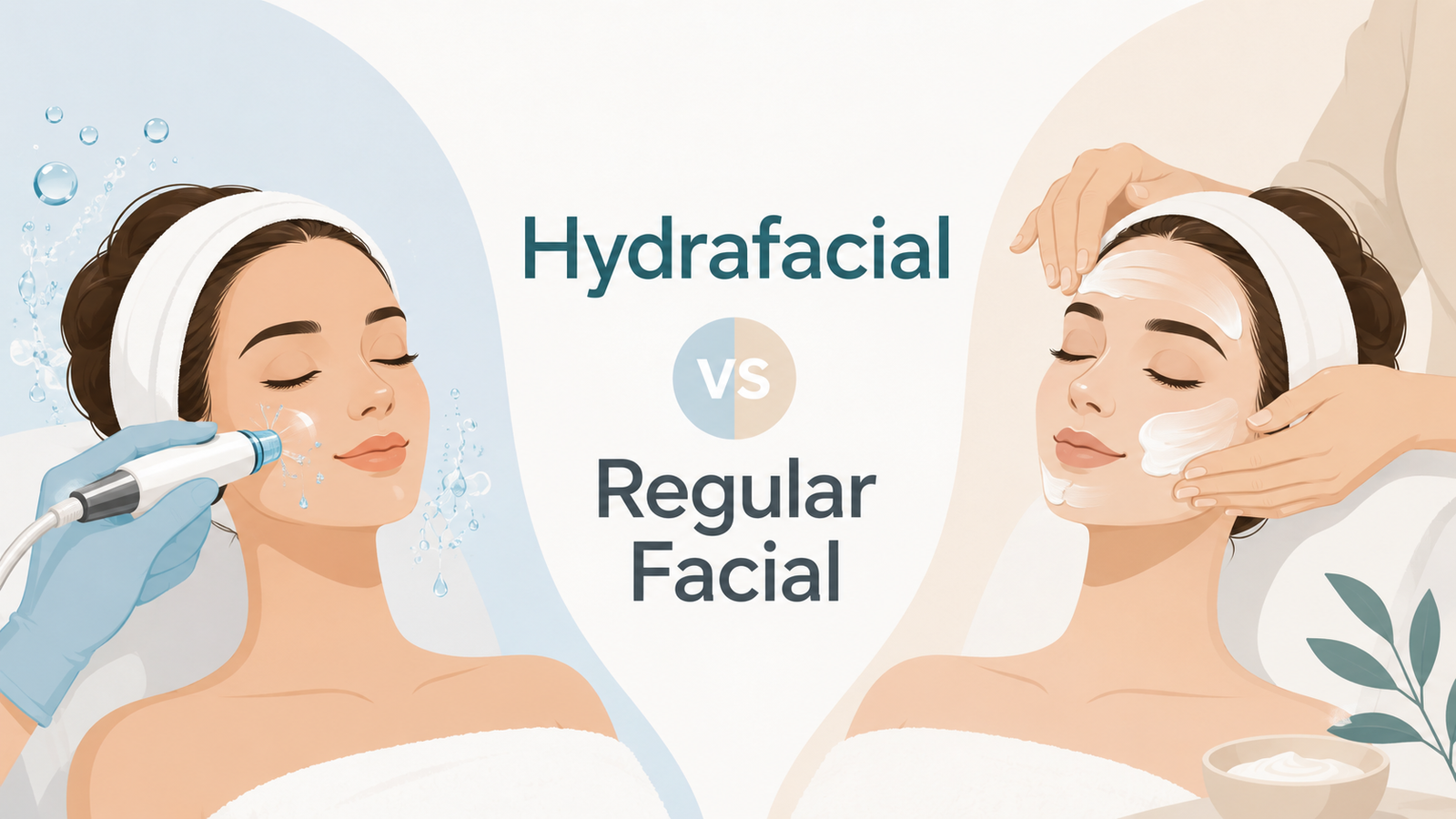
Choosing between a hydrafacial vs regular facial can feel surprisingly confusing. Both promise cleaner, brighter, fresher-looking skin. Both are popular in UK salons, skin clinics and aesthetic practices. And both can be relaxing, useful treatments when matched properly to your skin.
But they are not the same.
A Hydrafacial is a device-led treatment designed to cleanse, exfoliate, extract and hydrate the skin in one structured session. A regular facial is usually more manual and flexible, often combining cleansing, massage, masks, steam and optional extractions depending on the therapist and your skin needs.
So, which is better?
The honest answer is: Hydrafacial is often better for visible glow, congestion and quick results, while a regular facial may be better for relaxation, sensitivity, maintenance and a more personalised spa-style experience. The right choice depends on your skin type, budget, goals and how much downtime you can tolerate.
In this guide, we’ll compare hydrafacial vs facial treatments clearly, including benefits, drawbacks, costs, skin concerns, safety and what to ask before booking in the UK.
Hydrafacial vs Facial: The Quick Answer
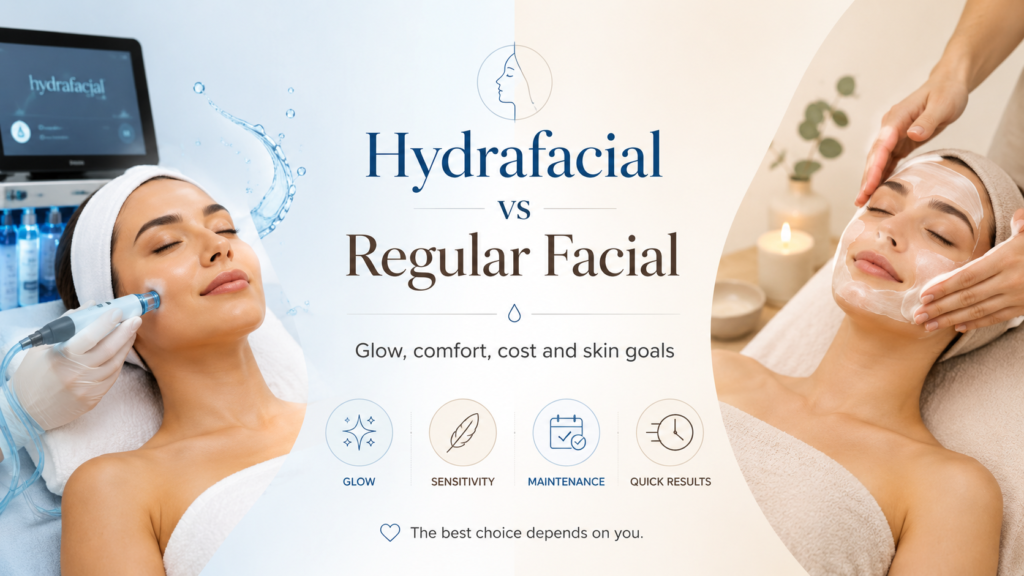
A Hydrafacial is a branded, machine-assisted skin treatment that uses suction, exfoliation and hydrating serums to deeply cleanse and refresh the skin. A regular facial is a broader term for a hands-on skincare treatment that may include cleansing, exfoliation, massage, masks and extractions.
Is Hydrafacial better than a facial?
Hydrafacial may be better if your main concerns are dullness, blocked pores, oily skin, mild congestion or wanting a noticeable glow before an event. A regular facial may be better if you want a gentler treatment, more massage, relaxation, or a lower-cost option.
There is no single “best” facial for everyone. Skin that is oily and congested may respond well to a Hydrafacial treatment, while very reactive or barrier-damaged skin may need a calmer, simpler facial first. Dermatology guidance on exfoliation also stresses the importance of choosing methods based on skin type, because dry, sensitive or acne-prone skin can react badly to overly aggressive exfoliation.
What Is a Hydrafacial Treatment?
A Hydrafacial is a non-invasive skin treatment carried out with a specialist device. It is sometimes described as hydradermabrasion because it combines exfoliation with hydration.
Most Hydrafacial treatments follow three broad stages:
1. Cleanse and exfoliate
The skin is cleansed, and dead surface cells are loosened. The official Hydrafacial treatment menu describes exfoliating steps designed to lift away dull, dead skin cells and reveal smoother-looking skin.
2. Extract and decongest
A suction tip is used to help clear debris from the pores. This is one of the biggest differences between hydrafacial vs normal facial treatments. In a regular facial, extractions are often manual. With Hydrafacial, suction does much of the work.
3. Hydrate and infuse
The treatment finishes with hydrating and antioxidant-rich serums. Hydrafacial describes this stage as an infusion of nourishing serum to moisturise and support a more luminous-looking finish.
A typical session is often chosen by people who want skin to look brighter, smoother and fresher quickly. Medical News Today describes HydraFacial as a non-invasive cosmetic treatment using exfoliation techniques and hydrating serums, while noting that products and results can vary between clinics.
Main Hydrafacial benefits
The most commonly reported hydrafacial benefits include:
- A cleaner, fresher skin feel
- Brighter-looking skin
- Less visible congestion
- Smoother texture
- A hydrated glow
- Little to no expected downtime for many people
- A structured treatment that is fairly consistent from clinic to clinic
It can be especially appealing before weddings, work events, holidays or special occasions because many people want results without peeling or obvious recovery time. However, it is still an exfoliating treatment, so it should not be treated as risk-free for every skin condition.
What Is a Regular Facial?
A regular facial is a general term for a professional skincare treatment. Unlike Hydrafacial, it is not one specific branded protocol. The experience can vary widely depending on the clinic, therapist, product range and treatment goal.
A standard facial may include:
- Skin consultation
- Cleansing
- Exfoliation
- Steam
- Manual extractions
- Facial massage
- Mask
- Toner, serum and moisturiser
- SPF application during daytime appointments
Some regular facials are very gentle and hydrating. Others are more active, using acids, enzymes, stronger exfoliation or extraction work. This flexibility is both a benefit and a drawback.
The benefit is that a skilled therapist can adapt the treatment around your skin on the day. For example, if your skin barrier looks stressed, they may skip strong exfoliation and focus on calming products. If your skin is congested, they may spend more time on extractions.
The drawback is inconsistency. A “regular facial” at one salon may be a relaxing cleanse and massage, while another may be a results-driven treatment with acids and extractions. This makes regular facial vs hydrafacial comparisons difficult unless you know exactly what is included.
Regular Facial vs Hydrafacial: Key Differences
Here is the easiest way to compare the two.
| Factor | Hydrafacial | Regular Facial |
|---|---|---|
| Treatment style | Device-led and structured | Manual and therapist-led |
| Main focus | Cleanse, exfoliate, extract, hydrate | Varies: relaxation, hydration, cleansing, massage, extractions |
| Extractions | Suction-based | Usually manual, if included |
| Consistency | More standardised | Depends heavily on therapist and products |
| Downtime | Usually minimal, but redness or sensitivity can happen | Depends on products and extractions |
| Best for | Dullness, congestion, oily skin, event glow | Relaxation, maintenance, sensitive skin, tailored care |
| Cost | Usually higher | Often lower, depending on clinic |
| Experience | More clinical/results-focused | More spa-like and relaxing |
Results
Hydrafacial often gives a more immediate “polished” look because it combines exfoliation, suction and hydration in one session. Regular facials can also produce a glow, but results depend more on the products used and the therapist’s approach.
Clinical evidence for Hydrafacial is still developing. A small 2022 study of adults with mild-to-moderate acne found improvements after a series of Hydrafacial Clarifying Treatments, but broader research remains limited. Medical News Today also notes that no research currently compares Hydrafacial directly with other skin treatments, so claims that it is always “better” should be treated carefully.
Comfort
Many people find Hydrafacial comfortable, with a light suction sensation. A regular facial may feel more relaxing because it often includes more massage and slower hands-on work.
If you dislike manual extractions, Hydrafacial may feel easier. If you dislike machine treatments, a regular facial may feel more comfortable.
Customisation
Both can be customised, but in different ways. Hydrafacial can use boosters and add-ons. A regular facial can be adjusted more freely by changing massage, masks, exfoliation strength and time spent on different steps.
Downtime and side effects
Hydrafacial is often marketed as having minimal downtime, but mild redness, tightness, sensitivity or irritation can still occur. Verywell Health notes that Hydrafacial side effects are usually mild and may include tightness, redness, sensitivity and irritation.
Regular facials can also cause redness or breakouts, especially after strong exfoliation or extractions. With either treatment, avoid booking immediately before an important event if it is your first time. Give your skin a few days of breathing room.
Which Treatment Is Better for Your Skin Concern?
The best treatment depends less on the name and more on what your skin actually needs.
For dull or tired-looking skin
Hydrafacial is often a strong choice because it combines exfoliation and hydration. If your skin looks flat from dead skin build-up, pollution, makeup residue or dehydration, the treatment can leave it looking fresher quickly.
A regular facial can also help, especially if it includes gentle exfoliation and a hydrating mask. Choose this route if your skin is dull but easily irritated.
Best choice: Hydrafacial for quick glow; regular facial for gentle radiance.
For blocked pores and blackheads
Hydrafacial may be better for mild congestion because of the suction-based extraction step. It can be useful for people who get clogged pores around the nose, chin and forehead.
However, deep blackheads or stubborn congestion may still need careful manual extraction or a longer-term acne plan. Do not expect one treatment to permanently clear blocked pores.
Best choice: Hydrafacial for mild to moderate congestion; tailored facial or dermatologist advice for persistent acne.
For acne-prone skin
This is where you need to be more careful. Hydrafacial can be useful for some acne-prone skin, and early research suggests it may improve the appearance of mild-to-moderate acne when used as a series. But active, inflamed, painful or cystic acne should be assessed properly before treatment.
A regular facial can help if it is designed for acne-prone skin and avoids heavy, pore-clogging products. The wrong facial, however, can aggravate breakouts.
Best choice: Skin consultation first. Avoid aggressive treatments during active flare-ups.
For sensitive or reactive skin
A regular facial is often the safer starting point because it can be stripped back to calming, barrier-supportive steps. Hydrafacial can still be suitable for some sensitive skins, but suction and exfoliating acids may be too much if your skin is already irritated.
The American Academy of Dermatology advises choosing exfoliation based on skin type and being gentle, particularly for dry, sensitive or acne-prone skin.
Best choice: Gentle regular facial first, unless your practitioner confirms Hydrafacial is suitable.
For fine lines and early ageing concerns
Hydrafacial may temporarily improve the look of plumpness and hydration, which can soften the appearance of fine lines. But it will not replace injectables, laser, prescription skincare or collagen-stimulating treatments.
A regular facial can also make fine lines look less obvious temporarily if it deeply hydrates the skin.
Best choice: Hydrafacial for short-term glow and hydration; consultation-led plan for deeper ageing concerns.
For relaxation and stress relief
A regular facial usually wins. Hydrafacial is efficient and results-focused, but it is not always as soothing as a hands-on facial with massage, aromatherapy-style elements and a slower pace.
Best choice: Regular facial.
Hydrafacial Cost, Safety and Booking Advice in the UK
In the UK, Hydrafacial is usually more expensive than a basic regular facial because it uses specialist equipment, branded consumables and optional boosters. Pricing varies by city, clinic reputation, treatment length and add-ons. For example, some UK clinic pages list Hydrafacial treatments from around £119 to £199 in London, while another UK provider lists facial HydraFacial pricing from £135.
Regular facials can vary even more. A simple express facial may be relatively affordable, while advanced facials using clinical skincare, peels or LED may cost much more.
Before booking either treatment, especially in a clinic you have not visited before, ask:
- Who will perform the treatment?
- What training have they completed?
- Is the device an official Hydrafacial device?
- Which products or acids will be used?
- Is the treatment suitable for your skin tone and skin condition?
- What should you avoid before and after?
- What happens if your skin reacts?
For UK consumers, the NHS advises checking whether cosmetic practitioners are on voluntary registers accredited by the Professional Standards Authority, such as the JCCP or Save Face. These registers indicate that practitioners meet set standards for training, insurance and skill. The Care Quality Commission also notes that non-surgical cosmetic treatments can have risks and should be carried out by trained, qualified people.
When to avoid or delay treatment
Delay either treatment if you have:
- Sunburn
- Open cuts or wounds
- Active cold sores
- A rash or skin infection
- A recent strong peel or laser treatment
- Very irritated or peeling skin
- Recent use of certain acne medications, unless cleared by a clinician
People who are pregnant, breastfeeding, using prescription acne medication or managing a skin condition such as rosacea, eczema or psoriasis should ask a qualified healthcare professional or experienced skin practitioner before booking. Verywell Health notes that there is limited direct safety evidence for Hydrafacial during pregnancy and recommends seeking healthcare guidance.
How to Choose Between Hydrafacial and a Regular Facial
Use this simple decision guide.
Choose Hydrafacial if:
- Your skin feels congested or oily
- You want a visible glow before an event
- You prefer machine-based extractions
- You want cleansing, exfoliation and hydration in one treatment
- You have had facials before and know your skin tolerates exfoliation well
Choose a regular facial if:
- Your skin is sensitive, dry or easily flushed
- You want relaxation and massage
- You are new to professional skincare
- You want a lower-cost maintenance treatment
- Your skin barrier feels damaged or over-exfoliated
- You prefer a slower, hands-on experience
Choose a professional skin consultation first if:
- You have active acne, rosacea, eczema or dermatitis
- You are pregnant or breastfeeding
- You are using prescription skincare
- You have darker skin that marks easily after inflammation
- You recently had laser, microneedling, injectables or a chemical peel
A good practitioner will not push the most expensive option automatically. They should look at your skin, ask about your routine and recommend what is safest and most useful for your goals.
FAQs About Hydrafacial vs Regular Facial
Is Hydrafacial better than a facial?
Hydrafacial is better for some goals, but not all. It may be better for quick glow, mild congestion, oily skin and a smoother feel. A regular facial may be better for sensitive skin, relaxation, massage and gentle maintenance. The best option depends on your skin condition and what you want from the treatment.
What is the main difference between Hydrafacial and normal facial?
The main difference is the method. Hydrafacial uses a device to cleanse, exfoliate, extract and hydrate the skin. A normal facial is usually performed manually and may include cleansing, massage, masks, steam, exfoliation and optional extractions.
How often should you get a Hydrafacial?
Many people book Hydrafacial monthly for maintenance, but the right frequency depends on your skin type, budget and goals. If you are treating congestion or acne-prone skin, your practitioner may suggest a short course first. Do not overdo exfoliating treatments if your skin feels dry, tight or irritated.
Can I get a regular facial after Hydrafacial?
Yes, but you should usually leave enough time between treatments to avoid over-exfoliating your skin. A gentle hydrating facial may be fine after a few weeks, but avoid stacking strong exfoliation, peels or aggressive extractions unless advised by a qualified practitioner.
Is Hydrafacial suitable for sensitive skin?
Hydrafacial can be suitable for some sensitive skin, but not all. If your skin is reactive, flushed, barrier-damaged or prone to flare-ups, start with a consultation. A gentle regular facial may be a better first step.
So, Which Should You Book?
When comparing hydrafacial vs regular facial, the better choice comes down to your skin’s needs.
A Hydrafacial is a strong option if you want a brighter, cleaner, more hydrated look with a structured, device-led treatment. It is especially popular for dullness, mild congestion and pre-event glow. A regular facial is still valuable, particularly if you want relaxation, hands-on care, sensitive-skin support or a more flexible treatment.
The smartest approach is not to chase the trendiest facial. It is to choose the treatment that matches your skin today.
Before booking, speak to a qualified practitioner, explain your skin history and ask what they would recommend and why. For your next step, read a related guide on choosing the right facial for your skin type or book a professional skin consultation before committing to a treatment.