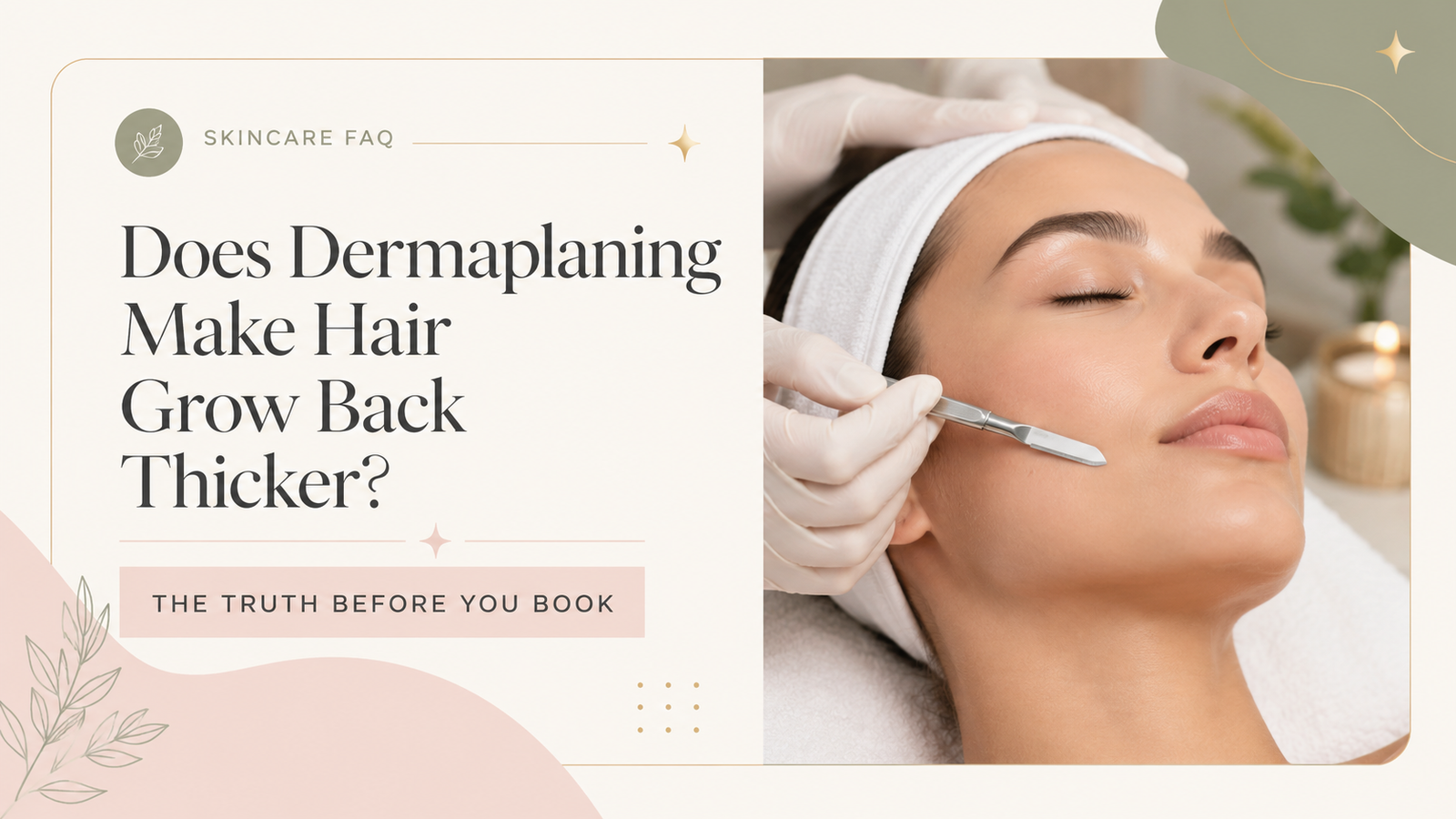
It is one of the biggest worries people have before booking a dermaplaning treatment: does dermaplaning make hair grow back thicker?
The thought is understandable. Nobody wants to remove soft peach fuzz and then feel like they have made facial hair darker, sharper or more noticeable. This fear is one of the main reasons people hesitate, even when they like the idea of smoother skin and better makeup application.
The reassuring answer is simple: no, dermaplaning does not make hair grow back thicker, darker or faster. It cuts fine facial hair at the surface of the skin. It does not change the hair follicle, the root, your hormones or your natural hair growth pattern.
What can happen is that regrowth may feel slightly blunt at first because the hair has been cut straight across. That temporary feeling is often mistaken for thicker hair. In this guide, we will break down the science, explain the common dermaplaning myths, and help you decide whether dermaplaning facial hair is right for your skin.
Quick Answer: Does Dermaplaning Make Hair Grow Back Thicker?
No, dermaplaning does not make hair grow back thicker. Dermaplaning removes fine facial hair and dead skin cells from the surface. It does not affect the hair follicle underneath the skin, so it cannot change the thickness, colour or speed of hair growth.
Mayo Clinic explains the same principle for shaving: shaving facial or body hair does not change its thickness, colour or growth rate. The hair may feel coarse for a short time because shaving creates a blunt tip, which can make regrowth feel more noticeable.
Dermaplaning works in a similar surface-level way. It is not laser hair removal, waxing or electrolysis. It does not damage, destroy or stimulate the follicle.
What Dermaplaning Actually Does to Facial Hair
Dermaplaning is a skin treatment where a trained practitioner uses a sterile blade at a controlled angle to remove dead skin cells and fine vellus hair, often called peach fuzz. Cleveland Clinic describes dermaplaning as a minimally invasive procedure that shaves away the top layers of skin and can be used for acne scars, unwanted hair and cosmetic skin smoothing.
The important point is that dermaplaning works on the surface.
It removes:
- Fine facial hair
- Dry surface skin cells
- Flaky texture
- Some superficial build-up
- The “fuzzy” layer that can catch makeup
It does not remove:
- The hair root
- The follicle
- Hormonal triggers
- Deep pigmentation
- Thick terminal hair permanently
- The cause of excessive facial hair
Most facial hair removed during dermaplaning is vellus hair. This is the soft, fine, light hair many people naturally have on the cheeks, jawline, upper lip and sides of the face.
Vellus hair is different from terminal hair, which is thicker, darker and more noticeable. Terminal facial hair can be influenced by genetics and hormones. Dermaplaning does not turn vellus hair into terminal hair.
Why Hair Can Feel Different After Dermaplaning
If dermaplaning does not make hair thicker, why do some people say their hair feels different afterwards?
The answer is the blunt edge.
Before dermaplaning, fine facial hair naturally has a soft, tapered tip. After dermaplaning, that same hair grows back with a freshly cut edge. For a short period, the edge may feel slightly sharper to your fingertips, especially if you touch the area often or check it closely in bright light.
This does not mean the hair has become stronger. It means the shape of the hair tip has changed.
Think of it like cutting grass. Freshly cut grass can feel sharper at the edge, but the grass has not become thicker at the root. The same logic applies to dermaplaning hair grow back concerns.
Does dermaplaning make hair grow darker?
No, dermaplaning does not make hair grow darker. Hair colour is determined below the skin by pigment production in the follicle. Since dermaplaning only cuts hair at the surface, it cannot change the colour of future hair growth.
The hair may look slightly more noticeable when it first grows through because the cut tip reflects light differently. This is a visual effect, not a biological change.
Does dermaplaning make hair grow faster?
No, dermaplaning does not make hair grow faster. Hair growth speed is influenced by genetics, hormones, age, health and normal hair cycles. A blade moving across the skin surface cannot speed up the follicle.
Mayo Clinic’s explanation of shaving supports this: shaving does not alter the thickness, colour or rate of hair growth.
Common Dermaplaning Myths Explained
Dermaplaning myths spread quickly because people often confuse surface hair removal with treatments that affect the follicle. Here are the most common myths and what they really mean.
Myth 1: Dermaplaning makes peach fuzz grow back as stubble
Dermaplaning can create a short blunt edge as hair grows back, but peach fuzz does not become beard-like stubble. If your facial hair was soft and fine before, it should grow back as the same type of hair.
Some people notice regrowth more simply because they got used to the completely smooth feeling after treatment.
Myth 2: Dermaplaning makes hair grow back darker
This is not true. Cutting hair does not change pigment production inside the follicle. If facial hair starts growing darker over time, it is more likely linked to hormonal changes, genetics, medication or a medical condition rather than dermaplaning.
Myth 3: Dermaplaning causes more facial hair
Dermaplaning does not create new hair follicles. You are born with your hair follicles. The treatment cannot increase the number of follicles on your face.
Myth 4: Dermaplaning is the same as shaving your face at home
Dermaplaning and shaving are similar in that both cut hair at the surface, but professional dermaplaning is usually more controlled and also focuses on exfoliation. A clinic treatment uses a professional blade, careful angles and skin preparation.
At-home facial razors can remove peach fuzz, but they may not exfoliate as evenly and can carry more risk if used on active acne, irritated skin or without proper hygiene.
Myth 5: Everyone with facial hair should dermaplane
Dermaplaning is not suitable for everyone. If you have active inflamed acne, open wounds, infection, a flare-up of eczema or very reactive skin, it may be better to wait or choose another treatment. WebMD lists inflammatory skin conditions as situations where dermaplaning may not be recommended, and notes possible short-term effects such as redness, soreness and a burning or tingling feeling.
Who Is Dermaplaning Best For?
Dermaplaning is often best for people who want smoother skin texture and temporary removal of fine facial hair. It can be a good option before an event, photo shoot or special occasion because makeup often sits more smoothly after the peach fuzz and dry surface cells are removed.
You may be a good candidate if you have:
- Fine peach fuzz
- Dull-looking skin
- Flaky surface texture
- Makeup that clings to facial hair
- Mild roughness
- Dry surface build-up
- No active inflamed acne in the treatment area
Dermaplaning is especially popular with people who want an instant smoother feel without chemical peeling, needles or heat-based treatments.
When dermaplaning may not be the right treatment
Dermaplaning may not be suitable if you have:
- Active acne breakouts
- Painful spots or cysts
- Broken skin
- Cold sores
- Skin infection
- Rosacea flare-ups
- Eczema flare-ups
- Recently sunburned skin
- Very sensitive or compromised skin barrier
If your main concern is thick, dark facial hair rather than peach fuzz, dermaplaning may remove it temporarily but may not be the best long-term option.
What If Facial Hair Really Is Getting Thicker?
If your facial hair is genuinely becoming thicker, darker or more widespread, dermaplaning is unlikely to be the cause. In that case, it is worth looking at other possible reasons.
In women, thick dark hair on the face, neck, chest, abdomen or thighs can be linked to hirsutism. NHS guidance explains that hirsutism is excessive hair growth in women and advises seeing a GP if it is a problem, especially if it appears with symptoms such as irregular periods.
Possible reasons for increased facial hair can include:
- Hormonal changes
- Polycystic ovary syndrome, often called PCOS
- Genetics
- Menopause-related hormone shifts
- Certain medications
- Changes in androgen levels
Aesthetic treatments can remove or manage the hair, but they do not diagnose the reason behind new facial hair growth. If the change is sudden, significant or emotionally distressing, speak to a GP before assuming it is caused by dermaplaning.
UK Safety Advice Before Booking Dermaplaning
Dermaplaning is widely available in UK salons, skin clinics and aesthetic clinics. Although it is often described as simple, it still uses a blade on the face, so hygiene and training matter.
NHS advice on cosmetic procedures says you should choose someone with the right training, skills and insurance, and ask about qualifications, experience, complications, aftercare and what happens if something goes wrong.
Before booking a dermaplaning treatment in the UK, ask:
- Who will perform the treatment?
- What training do they have in dermaplaning?
- Will a sterile single-use blade be used?
- Is my skin suitable today?
- Should I stop retinoids or exfoliating acids beforehand?
- What side effects are normal?
- What should I avoid afterwards?
- Who do I contact if I react badly?
- Is dermaplaning suitable if I have acne or sensitivity?
- How often should I have it done?
A trustworthy practitioner should not pressure you into treatment if your skin is inflamed, irritated or unsuitable on the day. They should also explain that dermaplaning is temporary hair removal and skin exfoliation, not a permanent facial hair solution.
Dermaplaning Aftercare: How to Keep Skin Calm
After dermaplaning, the skin may feel smoother and look brighter, but it can also be more sensitive for a short time. Good aftercare helps prevent irritation.
For the first 24 to 48 hours, it is usually wise to avoid:
- Scrubs
- Retinoids
- Strong exfoliating acids
- Heavy active serums
- Sunbeds
- Sauna or steam rooms
- Hot yoga or intense heat exposure
- Picking or rubbing the skin
Use a gentle cleanser, a simple moisturiser and broad-spectrum SPF during the day. This is especially important because dermaplaning removes surface build-up, leaving the skin more exposed to environmental irritation.
If you are having dermaplaning before a wedding, party or photoshoot, avoid booking it for the very first time the day before. Try it several weeks earlier first, so you know how your skin responds.
Suggested Internal Linking Opportunities
To strengthen topical authority and help readers take the next step, add internal links to:
- A service page for dermaplaning treatment
- A guide on dermaplaning aftercare
- A blog on dermaplaning vs chemical peel
- A guide on best facials for dull skin
- A page on facial hair removal options
- A blog explaining vellus hair vs terminal hair
- A consultation page for skin analysis and treatment planning
FAQs About Dermaplaning and Hair Regrowth
Does dermaplaning make hair grow back thicker?
No, dermaplaning does not make hair grow back thicker. It only cuts hair at the surface of the skin and does not affect the follicle. Regrowth may feel slightly blunt at first, but the hair itself has not changed.
Does dermaplaning make hair grow back darker?
No, dermaplaning does not make hair grow back darker. Hair colour is controlled by pigment activity in the follicle, and dermaplaning does not reach or alter the follicle.
How long does it take for hair to grow back after dermaplaning?
Most people notice fine facial hair gradually returning within a few weeks. The exact timing varies depending on your natural hair growth cycle. Many people book dermaplaning every four to six weeks, but this depends on skin tolerance and personal preference.
Is dermaplaning good for facial hair?
Dermaplaning is good for temporarily removing fine facial hair, especially soft peach fuzz. It can make skin feel smoother and help makeup apply more evenly. If you have thick, dark facial hair, you may prefer longer-term options such as laser hair removal or electrolysis after a professional consultation.
Can dermaplaning cause spots?
Dermaplaning can cause spots or irritation if it is done on unsuitable skin, with poor hygiene, or if aftercare is ignored. It is usually better to avoid dermaplaning over active inflamed acne, broken skin or infection.
Conclusion: The Hair-Growth Myth Should Not Put You Off
So, does dermaplaning make hair grow back thicker? No. This is one of the most common dermaplaning myths, but it is not supported by how hair growth works.
Dermaplaning cuts fine facial hair at the skin’s surface. It does not change the follicle, root, colour or growth speed. Any temporary “thicker” feeling is usually caused by the blunt edge of newly cut hair as it grows back.
The more important question is whether dermaplaning is right for your skin. If you want smoother texture, brighter-looking skin and temporary peach fuzz removal, it can be a helpful treatment. If you have active acne, irritation or sudden thick facial hair growth, get proper advice before booking.
For the next step, read a dermaplaning aftercare guide or book a consultation with a qualified skin professional who can assess your skin and explain whether dermaplaning is the safest option for you.