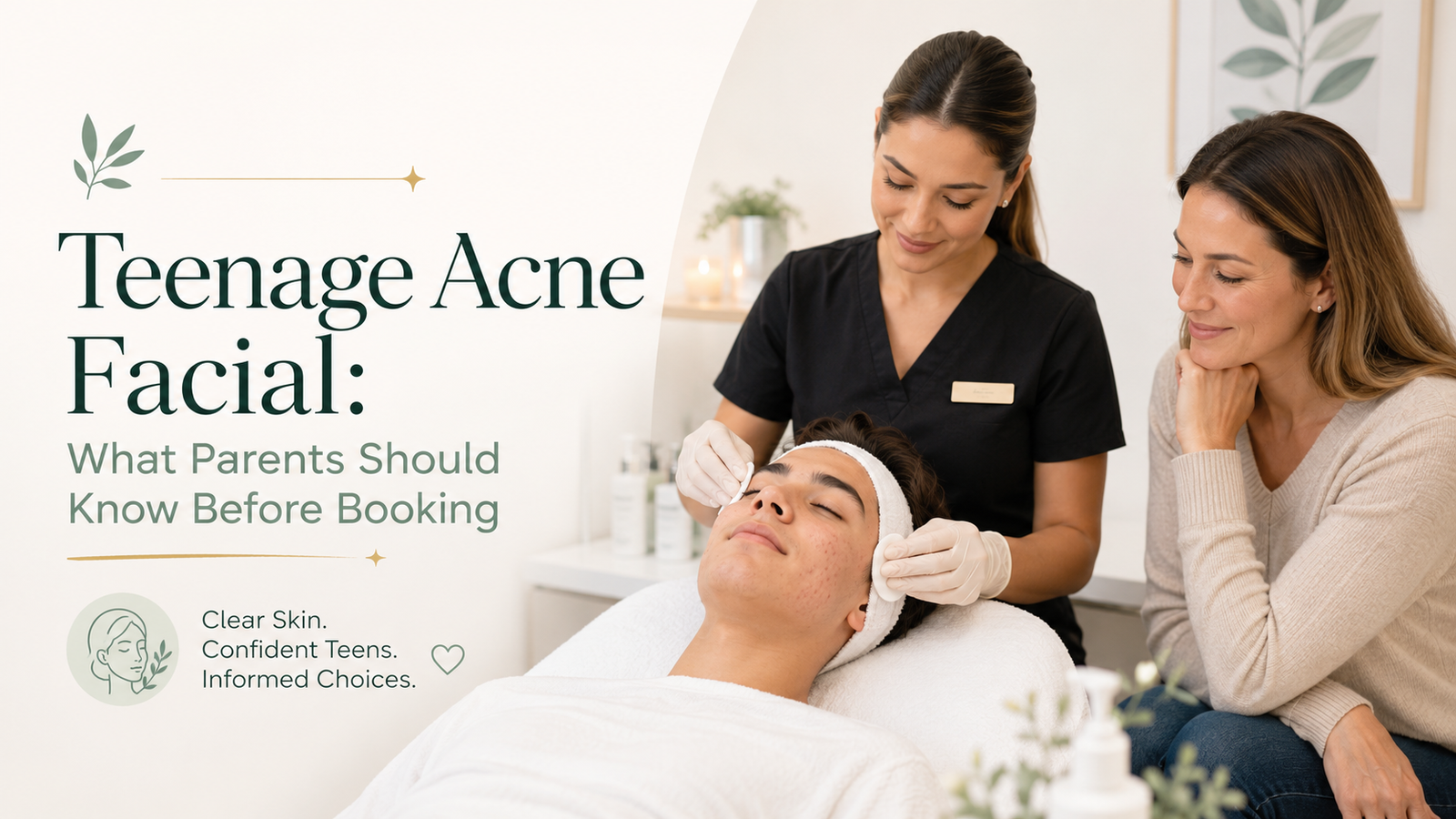
When a teenager starts struggling with spots, blackheads or angry breakouts, it can affect far more than their skin. It can change how they feel at school, how they appear in photos, and how confidently they show up in everyday life. For many parents, booking a teenage acne facial feels like a practical first step.
But is a facial actually the right choice for teenage acne?
The honest answer is: sometimes. A well-planned teen facial can help with congestion, oily skin, blackheads and simple skincare education. But a facial is not a cure for acne, and it should not replace medical treatment when acne is moderate, severe, painful or likely to scar.
This guide explains what a facial for teenage acne can and cannot do, when parents should speak to a pharmacist or GP, what to ask before booking a UK clinic, and how to help your teen build a safe routine at home.
Quick Answer: Is a Teenage Acne Facial Worth It?
A teenage acne facial may be worth it if your teen has mild congestion, blackheads, oily skin or occasional breakouts and needs help building a sensible skincare routine. It is less suitable as the only treatment for inflamed acne, cysts, painful spots or scarring.
NHS guidance says mild acne can often be discussed with a pharmacist, but moderate or severe acne, nodules, cysts, acne affecting the chest or back, or acne causing distress should be assessed by a GP. Acne treatments can take several months to work, so quick-fix expectations are not realistic.
A good teen facial should be gentle, educational and age-appropriate. It should not involve aggressive squeezing, harsh peels, strong actives or treatments that make the skin sore for days.
What Is a Teen Facial?
A teen facial is a professional skincare treatment designed for younger skin. It usually focuses on deep cleansing, gentle exfoliation, blackhead management, hydration and advice on daily skincare habits.
A typical facial for teenage skin may include:
- Skin consultation
- Gentle cleanse
- Mild exfoliation
- Steam, if suitable
- Careful blackhead extraction
- Calming mask
- Lightweight moisturiser
- SPF advice
- Product and routine guidance
The best teen facials are not just about what happens during the appointment. They also help teenagers understand their skin better. Many teens over-wash, scrub too hard, use too many trendy products, or copy routines from social media that are not suitable for acne-prone skin.
The British Association of Dermatologists advises gentle cleansing and warns that scrubbing too hard can irritate the skin and make acne worse. It also notes that blackheads are not caused by poor washing, which is an important message for teenagers who may already feel self-conscious.
What makes a teen facial different from an adult facial?
Teen skin is often oilier, more reactive and more affected by hormonal changes. A teenage facial treatment should be simpler than many adult facials. The goal is not anti-ageing, resurfacing or dramatic transformation. The goal is to calm, clear and support the skin barrier.
For example, a 15-year-old with blackheads around the nose and forehead may benefit from gentle extraction and routine advice. A 16-year-old with painful cystic acne on the cheeks needs medical support, not just a salon facial.
Can a Facial Help Teenage Acne?
Yes, a facial can help some teenage acne, but it depends on the type and severity of acne.
A facial may help with:
- Blackheads
- Whiteheads
- Oily skin
- Congested pores
- Dull or rough texture
- Mild breakouts
- Product build-up
- Poor skincare habits
A facial is less likely to control:
- Painful inflamed acne
- Cystic acne
- Nodules under the skin
- Acne scarring
- Acne on the chest or back
- Breakouts linked to hormones or medication
- Acne that is affecting mood or confidence
Acne is commonly linked to hormonal changes during puberty. NHS guidance explains that these hormonal changes can cause the oil-producing glands near hair follicles to produce more oil, while the lining of the follicle can thicken and block pores.
That means acne is not simply “dirty skin”. A facial can clean the surface and reduce congestion, but it cannot switch off the hormonal and inflammatory processes behind acne.
When should parents avoid booking a facial first?
Do not rely on a facial as the first step if your teen has painful spots, cysts, deep lumps, visible scarring or acne that is making them feel very low or anxious. NHS guidance recommends seeing a GP for moderate or severe acne, nodules, cysts, scarring risk or acne affecting mental wellbeing.
A good clinic should recognise this too. If a practitioner promises to “clear severe acne” with facials alone, that is a warning sign.
What Should an Acne Facial for Teens Include?
A safe acne facial for teens should be gentle, structured and based on the individual teen’s skin. It should begin with questions, not products.
1. Skin consultation
Before touching the skin, the practitioner should ask about:
- Age
- Acne history
- Current skincare routine
- Prescription or pharmacy acne treatments
- Allergies
- Sensitivity
- Picking or squeezing habits
- Sports, helmets or sweat triggers
- Makeup or sunscreen use
- Emotional impact of acne
This matters because some acne products, such as benzoyl peroxide or retinoids, can make the skin more sensitive. The clinic needs to know what your teen is already using before applying exfoliants, masks or active ingredients.
2. Gentle cleansing
A teen facial should remove oil, sunscreen, makeup and surface debris without stripping the skin. Harsh cleansing can damage the skin barrier and leave the face tight, red and irritated.
Teenagers often assume that squeaky-clean skin is good. In acne-prone skin, that feeling can actually mean the skin has been over-cleansed.
3. Mild exfoliation
Gentle exfoliation can help remove dead skin cells and reduce blocked pores. However, the strength should be suitable for teenage skin.
Strong peels or aggressive scrubs are not usually necessary for a first teen facial. If the skin is inflamed, exfoliation may need to be minimal or avoided.
4. Careful extraction
Extractions can be useful for blackheads and blocked pores, but only when done correctly. Poor extraction technique can bruise the skin, spread inflammation or increase the risk of scarring.
Parents should ask whether the practitioner performs extractions and how they decide what is safe to extract. Inflamed spots, cysts and deep painful lumps should not be squeezed.
5. Calming hydration
Teenage acne-prone skin still needs moisture. A good facial should finish with calming, non-comedogenic products that support the skin barrier.
Skipping moisturiser because the skin is oily is a common mistake. Dehydrated skin can become more irritated, and irritation can make acne routines harder to tolerate.
6. Simple aftercare
The appointment should end with clear aftercare. Your teen should know what to use that evening, what to avoid, and when they can restart acne products.
The British Association of Dermatologists advises that acne treatments often need at least 12 weeks before much improvement is seen, and some topical treatments can irritate the skin at first. That is why a calm, consistent routine is more useful than constantly changing products.
What Parents Should Ask Before Booking in the UK
In the UK, beauty and aesthetic treatment standards can vary, especially for young clients. Parents should choose a clinic carefully and avoid booking based only on social media photos or discount offers.
Ask these questions before booking a teenage facial treatment:
- Do you treat teenagers regularly?
- Do you require parental or guardian consent?
- Who will perform the treatment?
- What training do they have in acne-prone skin?
- What products will be used?
- Are extractions included, and how are they performed?
- What will you avoid if the acne is inflamed?
- What aftercare will be provided?
- Will you recommend a GP if acne looks moderate or severe?
- Are the products suitable for sensitive teenage skin?
This is especially important because young people can be influenced by social media trends and pressure around appearance. GOV.UK’s response on non-surgical cosmetic procedure licensing noted concerns about under-18s, informed consent, peer pressure and the need for parental or legal guardian consent for some lower-risk procedures being discussed in the aesthetics sector.
A standard teen facial is not the same as injectables or high-risk cosmetic procedures. Still, the wider principle is relevant: teenagers need extra care, clear consent and realistic expectations.
A note on cosmetic treatment rules for under-18s
In England, it is illegal to administer botulinum toxin or cosmetic fillers to anyone under 18, even with parental permission. This does not mean all facials are banned, but it shows how seriously under-18 cosmetic safety is treated.
For acne facials, parents should still look for a clinic that takes age, consent, safeguarding and skin health seriously.
Teenage Acne Facial vs Medical Acne Treatment
A facial and medical acne treatment are not the same thing.
A facial can support the skin. Medical treatment targets the acne process more directly.
Pharmacy or GP acne treatments may include benzoyl peroxide, topical retinoids, azelaic acid, topical antibiotics, oral antibiotics or hormonal treatment where appropriate. NHS guidance lists these as possible prescription options depending on acne severity and individual circumstances.
When a facial may be enough
A facial may be enough support when acne is mild and mostly involves blackheads, oiliness or occasional small spots. It can also be useful when a teen needs help choosing a basic routine and stopping harsh product habits.
When medical treatment is needed
Medical treatment is more appropriate when acne is painful, inflamed, spreading, leaving marks, causing distress or not improving with pharmacy advice.
A helpful way to think about it is this:
A teen facial helps manage the skin environment. Medical acne treatment helps manage the condition.
For many teenagers, the best approach is not one or the other. It may be a combination of medical advice, simple home skincare and occasional gentle facials for maintenance.
Simple Home Routine After a Facial for Teenage Acne
The routine after a facial for teenage acne should be boring in the best possible way. Teen skin usually improves with consistency, not with a cupboard full of strong products.
Morning routine
Use a gentle cleanser or simply rinse with water if the skin is dry or irritated. Apply a lightweight, non-comedogenic moisturiser, then finish with broad-spectrum SPF.
Sunscreen is especially important if your teen is using acne treatments that can make the skin more sensitive or if they are dealing with post-acne marks.
Evening routine
Cleanse gently to remove sunscreen, sweat and makeup. Apply any pharmacy or prescription acne treatment as advised. Follow with a light moisturiser if needed.
What to avoid
After a teen facial, avoid:
- Picking or squeezing spots
- Facial scrubs
- Too many acids
- Retinoids on the same night unless advised
- Heavy oils
- Sleeping in makeup
- Copying viral skincare routines
- Changing products every few days
If the skin becomes sore, red or flaky, pause strong actives and ask the clinic, pharmacist or GP for advice.
Suggested Internal Linking Opportunities
To build topical authority and guide readers naturally, add internal links to:
- A service page for teenage acne facial
- A guide on acne treatment for teenagers
- A blog on what causes teenage acne
- A guide on blackheads vs acne
- A post on best skincare routine for teenage skin
- A service page for acne consultations
- A guide on post-acne marks and pigmentation
FAQs About Teenage Acne Facials
What age can a teenager have an acne facial?
Many clinics offer teen facials from around 12 to 16 years old, but policies vary. For younger teens, parental consent is usually needed. The treatment should be gentle, age-appropriate and focused on skin health rather than cosmetic perfection.
Is a facial good for teenage acne?
A facial can be good for mild teenage acne, blackheads and oily skin. It can also teach better skincare habits. However, moderate, severe, painful or cystic acne should be assessed by a GP because it may need prescription treatment to reduce the risk of scarring.
How often should a teen get an acne facial?
For mild congestion, a teen may benefit from a facial every four to six weeks for a short period, then less often for maintenance. The exact frequency depends on the skin, budget and whether the teen is using acne medication.
Can a teen facial make acne worse?
Yes, it can if the treatment is too aggressive, extractions are done badly, or strong products irritate the skin. Some temporary purging or breakouts may happen after exfoliation, but painful inflammation, swelling or worsening acne should be taken seriously.
Should my teen see a GP or book a facial first?
If acne is mild, a pharmacist or gentle facial may be a reasonable first step. If acne is moderate or severe, painful, cystic, causing scarring or affecting confidence, book a GP appointment. A facial can support skin care, but it should not delay proper acne treatment.
The Safest Way to Support Teenage Acne
A teenage acne facial can be helpful when it is gentle, realistic and part of a wider skin plan. It may improve blackheads, oiliness, congestion and skincare habits. It can also give a teenager a confidence boost when handled kindly and professionally.
But facials should not be presented as a cure for teenage acne. If your teen has painful, inflamed, cystic or scarring acne, the safest next step is to speak to a pharmacist or GP and get the right treatment early.
Before booking, choose a clinic that understands teenage skin, asks proper consultation questions, explains aftercare clearly and knows when to refer for medical help. For the next step, read a simple teenage skincare routine guide or book a skin consultation with a qualified professional who can assess your teen’s skin properly.