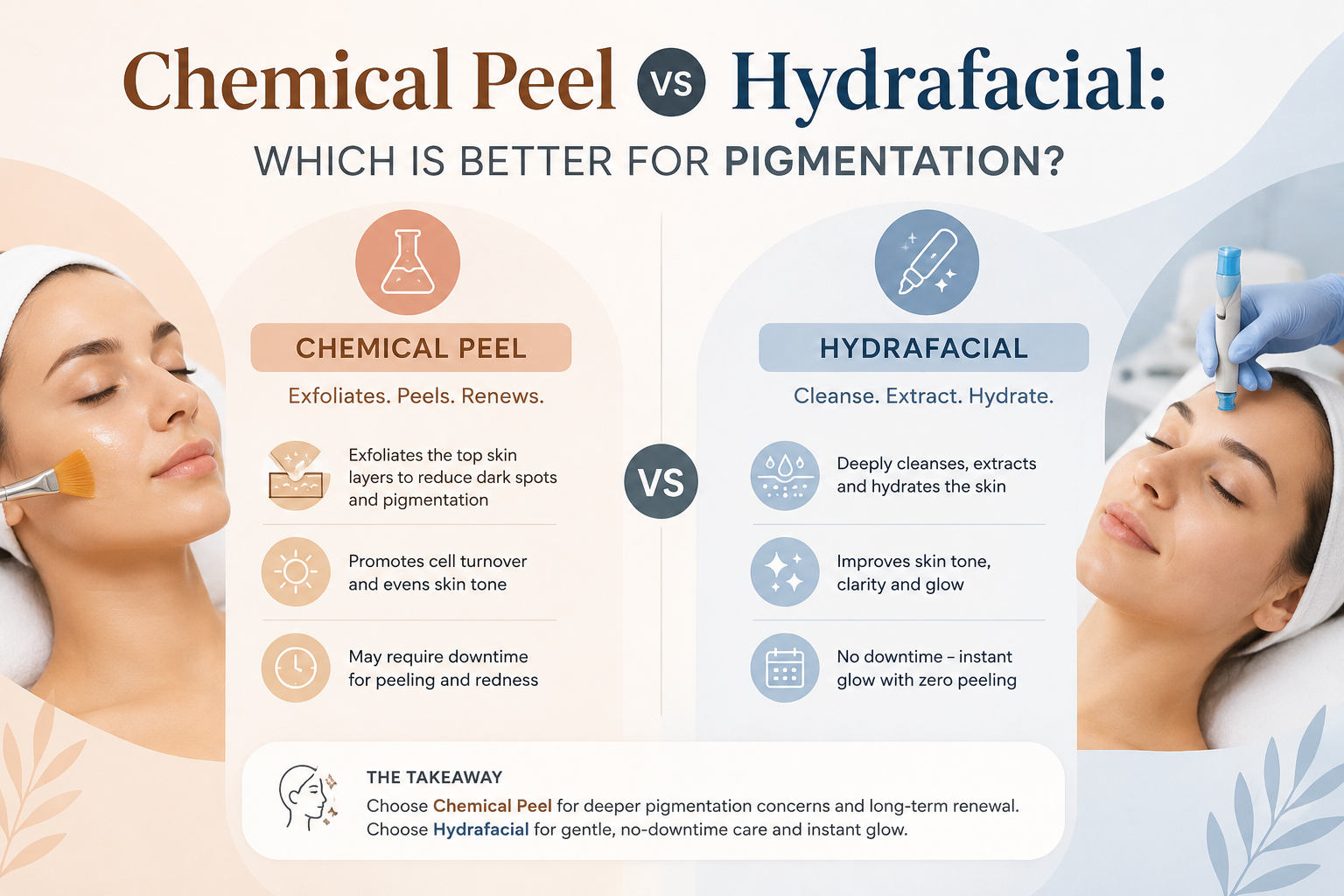
Pigmentation can be frustrating because it rarely has one simple cause. Dark patches, post-acne marks, sun spots and uneven tone can all look similar in the mirror, but they may need very different treatment plans. That is why the question of chemical peel vs Hydrafacial is so common.
Both treatments can make the skin look brighter and smoother. Both can be offered as facials for pigmentation. But they do not work in the same way, and they are not equally effective for every type of pigmentation.
The simple answer is this: a chemical peel is usually more targeted for pigmentation, while a Hydrafacial is usually better for hydration, glow, congestion and gentle maintenance. For stubborn pigmentation, especially melasma or deeper post-inflammatory marks, a peel-based plan may be more effective, but it must be chosen carefully to avoid making pigmentation worse.
This guide explains the real difference between Hydrafacial vs chemical peel, which one works better for pigmentation, what downtime to expect, and how to choose a safe UK clinic.
Quick Answer: Chemical Peel vs Hydrafacial for Pigmentation
A chemical peel is generally better for pigmentation if the goal is to fade uneven tone, sun damage, melasma or post-acne marks. A Hydrafacial can help skin look brighter and healthier, but it is usually gentler and less corrective for deeper pigmentation.
Chemical peels work by applying controlled acids to exfoliate the skin at different depths. Depending on the peel type, they can help lift pigmented surface cells and encourage fresher-looking skin. The British Association of Dermatologists notes that chemical peels can improve melasma by removing the outermost cells that contain pigment, but they should be performed by an experienced practitioner because they can also worsen pigmentation or cause scarring if done badly.
Hydrafacial is a branded treatment that combines cleansing, exfoliation, extraction and serum infusion. The official Hydrafacial site describes the treatment as targeting glow, hydration, pore appearance, skin tone and texture. It can be helpful for dullness and mild uneven tone, but it is not usually the strongest treatment for established pigmentation.
| Concern | Better option in most cases |
|---|---|
| Mild dullness | Hydrafacial |
| Surface pigmentation | Chemical peel |
| Post-acne dark marks | Chemical peel, sometimes Hydrafacial as support |
| Melasma | Medical skincare first, peel only with expert guidance |
| Dehydrated skin with uneven tone | Hydrafacial |
| Sun damage and rough texture | Chemical peel |
| Sensitive skin or first-time treatment | Hydrafacial or very gentle peel |
| Event-ready glow | Hydrafacial |
What Is a Chemical Peel?
A chemical peel is a skin-resurfacing treatment where a professional applies an acid solution to the skin. The aim is to remove damaged or dull surface cells and stimulate renewal.
Peels come in different strengths. A light peel works mainly on the outer layer of the skin. A medium peel reaches deeper. A deep peel is much more intensive and is usually medical rather than beauty-clinic level. Mayo Clinic explains that light peels are used for fine wrinkles, acne, uneven skin tone and dryness, while medium peels can treat wrinkles, acne scars and uneven skin tone. It also notes that chemical peels cannot tighten sagging skin or remove deep scars.
Common peel ingredients include:
- Glycolic acid
- Lactic acid
- Mandelic acid
- Salicylic acid
- Jessner’s solution
- Trichloroacetic acid, often called TCA
For pigmentation, the choice of peel matters. A gentle mandelic or lactic acid peel may suit sensitive or deeper skin tones better than an aggressive peel. Salicylic acid may suit oily, acne-prone skin. TCA peels can be more powerful but also carry more risk if the wrong strength or technique is used.
Chemical peel for pigmentation: how it helps
A chemical peel for pigmentation may help by:
- Removing pigmented surface cells
- Improving uneven skin tone
- Supporting cell turnover
- Softening post-acne marks
- Smoothing rough texture
- Helping skincare penetrate more evenly afterwards
The key phrase is “may help”. Pigmentation is complex. If your pigmentation is driven by hormones, heat, inflammation or ongoing sun exposure, a peel alone will not fix it permanently.
What Is a Hydrafacial?
A Hydrafacial is a multi-step facial treatment that uses a device to cleanse, exfoliate, extract impurities and infuse hydrating or targeted serums. Many people like it because it gives a quick fresh look without the obvious peeling or downtime associated with stronger chemical peels.
A Hydrafacial often includes:
- Cleansing
- Gentle exfoliation
- Light acid peel step
- Suction-based extraction
- Hydrating serum infusion
- Optional boosters
- Optional LED light therapy
This makes it a good option for people who want their skin to look brighter before an event, reduce congestion, improve hydration or support a regular maintenance routine.
Hydrafacial for pigmentation: what to expect
A Hydrafacial for pigmentation can improve the appearance of dullness and uneven tone, especially when the pigmentation is mild and close to the surface. It may also make the skin look healthier because hydrated skin reflects light better.
However, Hydrafacial should not be oversold as the best treatment for pigmentation. It is generally a supportive treatment rather than a corrective pigmentation treatment. If you have melasma, sun spots or stubborn post-inflammatory hyperpigmentation, you may need prescription skincare, targeted peels, laser, microneedling or a combination plan depending on your skin type and diagnosis.
Hydrafacial vs Chemical Peel: Key Differences
The difference between Hydrafacial vs chemical peel comes down to intensity, purpose, downtime and depth.
1. Treatment goal
A Hydrafacial is mainly a skin-health and glow treatment. It focuses on cleansing, exfoliation, hydration and congestion.
A chemical peel is more corrective. It is often chosen for pigmentation, acne, rough texture, sun damage and uneven tone.
2. Depth of exfoliation
Hydrafacial exfoliation is usually gentle. It removes surface build-up and supports a smoother look.
Chemical peels vary from very mild to much deeper. This makes them more customisable, but also more risky when performed by someone without enough training.
3. Downtime
Hydrafacial usually has little to no downtime. You may look slightly pink, but many people return to normal activities the same day.
Chemical peels vary. A light peel may cause mild redness and dryness for a few days. A medium peel can involve visible peeling, tightness, darkening before shedding, and a longer recovery period. Mayo Clinic notes that light peel areas may take one to seven days to heal, while medium peel areas can take seven to fourteen days, with redness sometimes lasting longer.
4. Pigmentation results
For pigmentation, chemical peels usually have greater potential because they can be selected specifically to target pigment and renewal.
Hydrafacial can brighten the skin, but it is not usually enough for stubborn pigmentation on its own.
5. Risk level
Hydrafacial is generally lower risk when performed correctly, though irritation, breakouts or sensitivity can still happen.
Chemical peels carry a higher risk, especially medium and deep peels. Possible complications include burns, prolonged redness, infection, scarring, and darker or lighter patches. Mayo Clinic warns that chemical peels can cause hyperpigmentation or hypopigmentation, with colour changes more common in brown or black skin and sometimes permanent.
Which Is the Best Treatment for Pigmentation?
The best treatment for pigmentation depends on the type of pigmentation you have. This is where many people go wrong. They choose a treatment based on TikTok, a discount offer or a friend’s result, without knowing what type of pigmentation they are treating.
For post-acne pigmentation
Post-acne pigmentation often appears as brown, red or purple marks after spots heal. If the marks are brown, they are usually pigment-related. If they are red or pink, they may be vascular redness rather than pigment.
Chemical peels can be useful for brown post-acne marks, especially when combined with daily sunscreen and pigment-regulating skincare. A Hydrafacial may help if your skin is congested and dull, but it will usually be more of a maintenance treatment.
Best option in many cases: chemical peel, supported by home skincare.
For melasma
Melasma usually appears as symmetrical brown or grey-brown patches, often on the cheeks, forehead, upper lip or jawline. It can be triggered by hormones, pregnancy, contraception, genetics, heat and UV exposure.
This is the pigmentation type where caution matters most. The British Association of Dermatologists states that skin-lightening creams should be used only when prescribed and under medical supervision, and that procedures such as chemical peels can improve melasma but may also make pigmentation worse if performed incorrectly.
Best option in many cases: medical skincare and strict sun protection first, with peels only under experienced supervision.
For sun spots and age spots
Sun spots are often caused by years of UV exposure. A chemical peel may help soften mild sun damage and uneven tone. However, individual dark spots should be assessed properly, especially if they are changing, irregular, bleeding, crusting or new.
Best option in many cases: professional skin assessment first, then peel, laser or medical treatment depending on the diagnosis.
For dullness and mild uneven tone
If your skin just looks flat, tired, dehydrated or slightly uneven, Hydrafacial may be enough. It can give a quick glow and improve smoothness without visible peeling.
Best option in many cases: Hydrafacial, especially before an event.
UK Safety Advice Before Booking Either Treatment
In the UK, non-surgical cosmetic treatments are widely available, but standards can vary. That means your choice of practitioner matters just as much as your choice of treatment.
NHS advice on cosmetic procedures recommends having a consultation with the person who will carry out the procedure and asking about their qualifications, experience, complications, aftercare and what happens if something goes wrong.
Before booking a chemical peel or Hydrafacial, ask:
- Who will perform the treatment?
- What training do they have in treating pigmentation?
- Have they treated your skin tone before?
- What peel strength or Hydrafacial booster will be used?
- What side effects are possible?
- What should you stop using before treatment?
- What aftercare is required?
- Who do you contact if your skin reacts badly?
- Are before-and-after photos realistic and unfiltered?
- Will they patch test or start conservatively if needed?
Be especially careful with strong peels, “medical-grade” claims, heavy discounts, mobile treatments in non-clinical settings, or anyone promising to remove pigmentation completely in one session.
Aftercare: What Helps Pigmentation Results Last?
Whether you choose a peel or a Hydrafacial, aftercare can make or break your results.
The most important step is daily broad-spectrum sunscreen. Pigmentation is highly influenced by UV exposure, and even the best clinic treatment can fail if your skin is not protected afterwards.
After a chemical peel, you should usually avoid:
- Direct sun exposure
- Scrubs and exfoliating acids
- Retinoids for a short period
- Picking or peeling flakes
- Hot saunas or steam rooms
- Heavy workouts immediately after treatment
- Strong active skincare until advised
After a Hydrafacial, aftercare is usually simpler. You may still be advised to avoid strong exfoliants, retinoids and heat for a day or two, depending on what was used.
For pigmentation-prone skin, a long-term plan may include:
- SPF 30 or 50 every morning
- Vitamin C or antioxidant serum
- Azelaic acid
- Retinoids where suitable
- Tranexamic acid skincare
- Prescription pigment creams if clinically appropriate
- Maintenance treatments every few weeks or months
Pigmentation treatment is not just about removing existing marks. It is about reducing the chance of new marks forming.
Suggested Internal Linking Opportunities
To strengthen topical authority and help readers take the next step, add internal links to:
- A service page for chemical peel treatments
- A service page for Hydrafacial treatments
- A guide on chemical peel aftercare
- A guide on pigmentation treatment options
- A blog on melasma vs hyperpigmentation
- A guide on best skincare ingredients for pigmentation
- A consultation page for skin analysis and treatment planning
FAQs About Chemical Peel vs Hydrafacial
Is a chemical peel or Hydrafacial better for pigmentation?
A chemical peel is usually better for pigmentation because it can target uneven tone and pigmented surface cells more directly. A Hydrafacial can brighten and hydrate the skin, but it is generally better for glow, congestion and maintenance than stubborn pigmentation.
Can Hydrafacial remove dark spots?
Hydrafacial may soften the appearance of mild dark spots by exfoliating and hydrating the skin, but it usually will not remove deeper or stubborn pigmentation. For dark spots caused by sun damage, acne marks or melasma, you may need a targeted pigmentation plan.
Are chemical peels safe for darker skin tones?
Chemical peels can be safe for darker skin tones when the correct peel, strength and preparation are used. However, the risk of post-inflammatory hyperpigmentation is higher if the peel is too aggressive or aftercare is poor. Choose a practitioner experienced with brown and black skin.
How many chemical peels do I need for pigmentation?
Many people need a course of three to six light or medium peels, spaced several weeks apart. The exact number depends on the type of pigmentation, your skin tone, peel strength, home skincare and sun protection habits.
Can I have a Hydrafacial and chemical peel together?
Sometimes, yes, but not always in the same session. Some clinics use Hydrafacial as skin preparation or maintenance between peels. If your skin is sensitive or pigmentation-prone, treatments should be spaced carefully to avoid irritation.
Conclusion: Which Treatment Should You Choose?
When comparing chemical peel vs Hydrafacial, the right choice depends on your skin concern.
Choose a Hydrafacial if your skin is dull, dehydrated, congested or you want a quick glow with little downtime. Choose a chemical peel if your main goal is to improve pigmentation, sun damage, post-acne marks or uneven tone.
For stubborn pigmentation, especially melasma, the safest approach is a professional consultation first. A good practitioner will identify the type of pigmentation, assess your skin tone, discuss risks honestly and build a plan that includes sunscreen and home skincare, not just clinic treatments.
Your next step should be simple: book a skin assessment, ask clear questions, and choose the treatment that matches your pigmentation type rather than the one that sounds trendiest.